
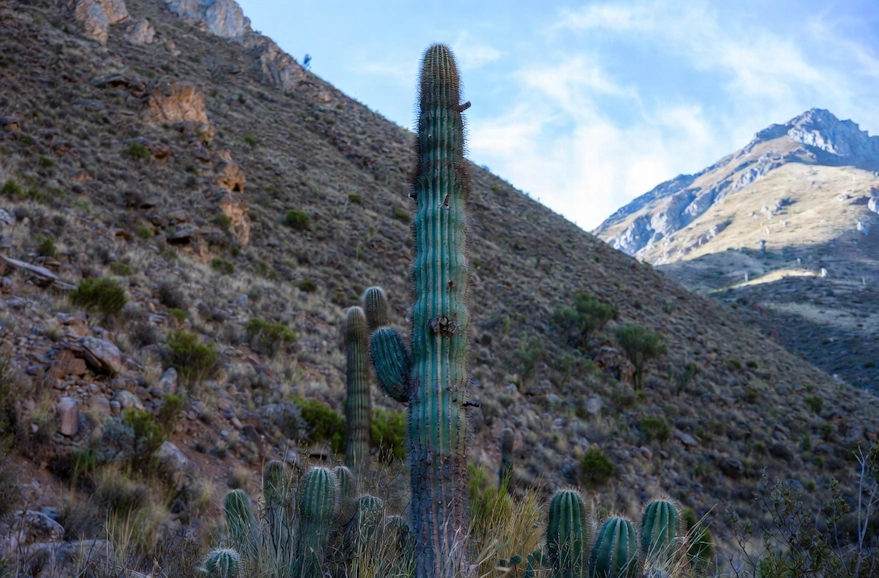
Okay, so today we are going to talk about San Pedro, which is hands down one of my most favorite entheogens. San Pedro is a cactus genus in the family Cactaceae. The two most common species of San Pedro are Echinopsis pachanoi and Echinopsis peruviana.
Description of the Conduct
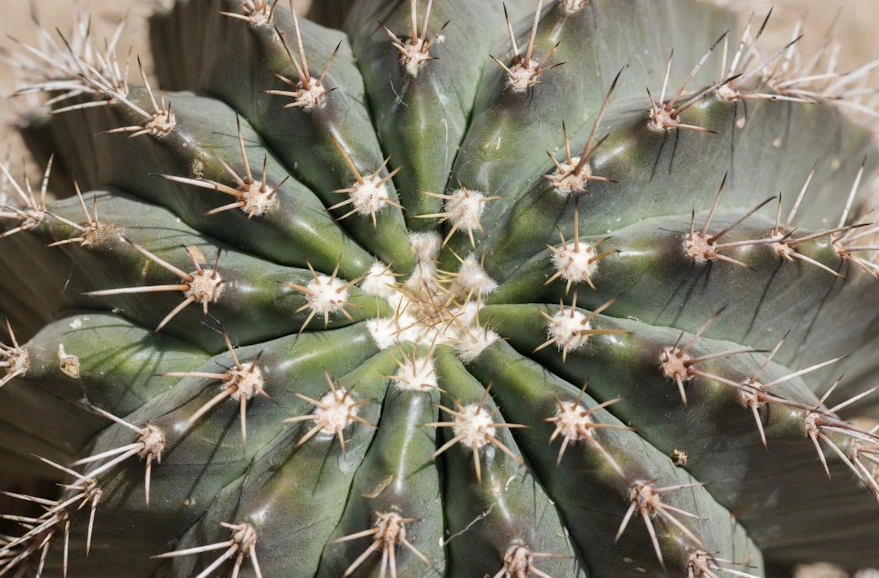
The San Pedro cactus is a branching columnar cactus that reaches heights between 7 and 23 feet. It can be 8-15 cm in diameter. Typically, San Pedro has 5- to 14-wide, rounded ribs. These right here would be the ribs—you can count at the tip. This one here has seven points. People also say of the ribs and amount of points that make up the San Pedro is what determine whether it is male or female. They say those are the ‘males’ that have more than seven ribs, and the ‘females’ have less than seven ribs. These are also the same people that say the female cactus is the one that protects the house, so you should consider planting it on your grounds. And they say that those with more than seven points, who are the males, are more recommended for a trip. Clearly, there are no studies on the gender of San Pedro, but this would be information that’s passed from mouth to mouth over the years. These data aren’t corroborated because regardless of the number of points on the San Pedro, it contains mescaline.
Habitat and Distribution San Pedro
A Cactus of the Andes San Pedro is an Andean species. You can see it growing at 1,000 to 3,000 m in the mountains! That’s because it’s in Ecuador, Bolivia, Peru, Chile, and Argentina. It can also be grown elsewhere—this is a pretty hardy cactus, at least by my standard. Even in humid environments, this cactus thrives. The cold and rain make it flourish. It is native to the high Andes, so it’s accustomed to the altitude as well as lots of sunshine.
Different Types At a Glance
Ok, well I have now obtained what’s known as Echinopsis Peruviana. This one right here is it. How do you tell it from Echinopsis pachanoi—the much more common San Pedro? On the peruviana they are slightly bigger, around 1 to 2 centimeters long and they are grey-brown in color. The pachanoi, though, has spines so tiny that they’re practically invisible — they’re white and very small. Both of these are used traditionally because they both contain mescaline.
What Is Inside: The Chemistry
Of The main active ingredient in San Pedro for psychedelic effects is mescaline. What’s more, mescaline was the first psychedelic substance isolated, in 1897, by German chemist Arthur Heffter. It’s only that he studied it from a psychiatric perspective, considering its effects akin to psychotic symptoms. Apart from mescaline, there are other alkaloids, as well, such as tyramine, hordenine, 3-methoxytyramine, anhalonine and 3,4-dimethoxyphenethylamine. Another well-known mescaline-containing cactus is peyote. Peyote is actually an endangered species now, which is a reality check for all of us to be considerate in the way we utilize these sacred plants. My personal recommendation? If you live somewhere San Pedro grows, try getting a cutting and planting it. Help keep the species around.
A Bit of History and Culture
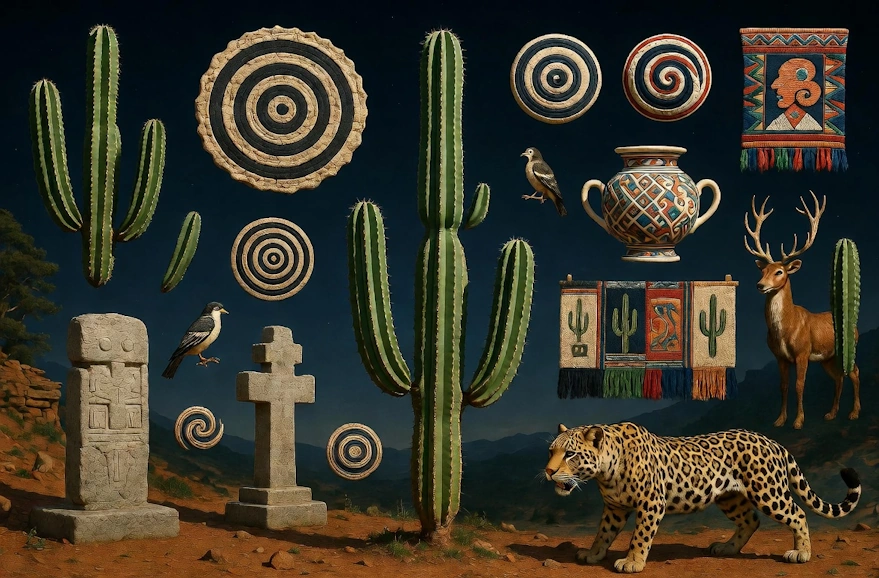
San Pedro has been consumed in spiritual/religious ceremonies of the Andean people for a very, very long time. In fact in the Andes archaeologists discovered a 30-centimeter cactus specimen dating to 6,400 BC. That finding was in the Guitarrero Cave, high in Ancash, Peru. It shows you just how deep the relationship goes between people and this plant. In the ceremonial center of Chavín, a stone stele with a representation of the San Pedro cactus was found in 1970 by him, and later Luis Lumbreras, among other archaeological findings from the Chavín culture dating back to 1300 BC, ceramics, fabrics, and carvings representing the San Pedro cactus have been found. These are usually accompanied by spirals and some animal species that would be birds, deer, and jaguars. The union between the animal and plant world is evident in many myths and legends in which it’s said that people will be transformed into plants. According to these legends, plants that generated pain or were poisonous were considered demonic plants, and those that served us for curative purposes are considered divine plants. This cactus is also known as huachuma, achuma, cuco, chao, gigantón. Huachuma is the connection with Pachamama. This plant serves us as a purifier of the body, mind, and spirit. For shamans, there are two representative power plants that would be ayahuasca and San Pedro. Ayahuasca is the female spirit of the Amazon, and San Pedro is the male spirit of the Andes. The San Pedro name is a word from religious syncretism, and this is because the cactus is associated with the keys to heaven, and San Pedro would be, according religious beliefs, the holder of the keys to heaven. San Pedro and ayahuasca are taken in night-time sessions, says shaman, and this is thought to be because the spirit works at night. San Pedro sessions are held near your homes to protect all its inhabitants.
Cultivation
San Pedro also requires rich, well-drained soil and it can grow at a rate of half a meter per year. As any other plant, San Pedro requires different attendances. Overwatering can cause fungus. Too much sun can also produce burns in the San Pedro, so in summer is better to put it in a place with some shadow. With respect to growing San Pedro, there are two ways: seeds and cuttings. What I read also from many said is best by cutting because you get the plant much faster. When you take a cutting you get a clone of the mother plant. In order to cultivate by seeds, we will have to use sandy soil and perlite—this assists us in keeping up with the aeration. We’ll also use a bit of peat. We add a bit of San Pedro and tap with soil after we put this materials. We will begin to see results in 2 to 5 weeks. By cuttings, what we’ll get is a clone of the mother plant. To perform multiplication by cuttings, the first thing we have to do is find our cactus, give it a cut in the part we want to make the cutting. After making the cut, what we’ll do is on the cut part, we could put ash on top or we can put cinnamon, and this is to avoid some possible fungal contaminations. After a period of 15 days, the San Pedro will have already dried its wound and will be ready to plant. Here, we’ll proceed to plant it in the following way: taking this as an example, we’ll have our complete San Pedro, and what we’ll do is plant half of the San Pedro. This is so that it can root well and so that it can continue growing. When we have a cutting with the top part cut, we have to consider that San Pedros grow from the ends, from the sides of the cut, so we have to leave a bit of area so that the San Pedros can develop. This is a San Pedro that sprouted from a slice of a cactus, so I only needed to do this motion to remove it, and now we can cut another slice from here. The plants that we use must be adult plants, with more than 7 centimeters in diameter and more than 50 centimeters high, because 50 centimeters is the minimum we can use for an experience.
Other Uses
Another use of San Pedro would be as an ornamental plant, and that’s because it’s a showy species. In South America, San Pedro is also used to create boundary spaces. The San Pedro cactus is also used to treat nervous conditions, joint problems, drug dependencies, hypertension, and heart problems. Among other properties of these cacti, we have that it has anti-rheumatic, deworming properties; it can also be used as shampoo. Like other cacti, such as cabuya, it also has properties as a paint adherent and can also serve for curing wood since this is quite resistant to moths. It also has antimicrobial properties and serves us as an inducer of psycho-exploration. A handful of San Pedro patients as well as a number of Healer Therapeutics clients swear by its effect on ameliorating diabetes, hepatitis, cancer, joint pain, high blood pressure, paralysis, and heart diseases. The cure for the San Pedro takes place after the ceremony when the person has already integrated the experience and starts to live a clean and more responsible life. San Pedro gives us entry to our subconscious mind, which surfaces memories, allowing us to obtain closure and healing.
Etymology
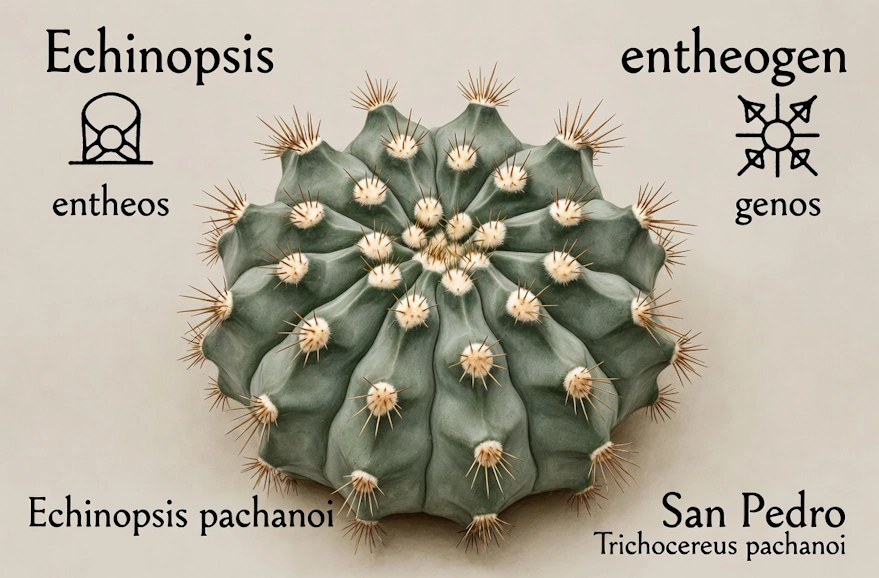
The genus part, Echinopsis, is derived from the Greek echinos = sea urchin and opsis = appearance. The name pachanoi given in honor of Professor Abelardo Pachano. The most common varieties of San Pedro are Echinopsis pachanoi and Echinopsis peruviana, which are sometimes referred to as Trichocereus pachanoi or Trichocereus peruvianus. The meaning of entheogen comes from: entheos, literally meaning inspired by the gods, and genos (γένος), origin; thus entheogen means “that which causes one to [be] born from the [spiritual] perspective of a god”.
Mixtures and Effects
Experienced shamans mix San Pedro with floripondio; this visionary mixture is known as cimora. The effects of San Pedro are similar to those of peyote, only the taste is a bit less bitter, and also the duration of the trip is a bit longer. After consuming San Pedro, the effects can appear from 1 to 4 hours after its consumption, and these effects can last from 12 to 18 hours—this depends on the dose that has been consumed. The usual effects are hypersensitivity to light with dilated pupils, also alteration of the heart rhythm that produces an acceleration of the heart rhythm, and there would be hallucinations. One of the main characteristics of San Pedro is synesthesia; this means that we can perceive the external world through different senses—we could see music or we could hear colors. It can also produce a feeling of unification with the universe and a sensation of altered states of consciousness, besides out-of-body experiences and mystical experiences with the self. Following a few hours of taking it, you can feel a sense of physical ease and mental calmness that is much like what you get when you meditate. Do not take San Pedro with other drugs. It’s also convenient to have someone with experience who can serve as a guide and who can transmit tranquility. Clearly, you can’t perform an activity that requires so much concentration under the effects of San Pedro. You can’t drive under the effects of San Pedro because it would be dangerous. In the consumption of San Pedro, a natural environment or a place where you can be calm is recommended.
Preparation and Consumption
Regarding its forms of use, San Pedro has an outer layer that’s like plastic; this we have to remove and throw it away immediately. After that, we’ll find a superficial green skin; this is the skin we’ll consume. San Pedro also contains a white core; this isn’t consumed since it doesn’t contain mescaline and it’s what generates nausea and vomiting. So that the plant lasts indefinitely and without losing its potency, what is done is to let the green part dry and then grind it and store it in powder form. Clearly, the preparation will vary depending on the ritual you’re going to attend, because for some, the purge is quite important—the purge of the body—so the white part would be what makes us vomit and purges our body, and the green part is what purges the spirit.
Dosage
Regarding dosage, it’s usual to consume 40 to 50 centimeters, which we could measure with the elbow, since the elbow measures about 45 to 50 centimeters. This would be a medium dose. This would represent 350 to 700 grams of San Pedro. The dose per person of green tissue varies between 14 grams, which would be a low dose, between 25 to 35 grams, which would be a medium dose, and between 35 to 50 grams, which would be a high dose, in which we can have a trip of up to 18 hours.
Huachuma Preparation
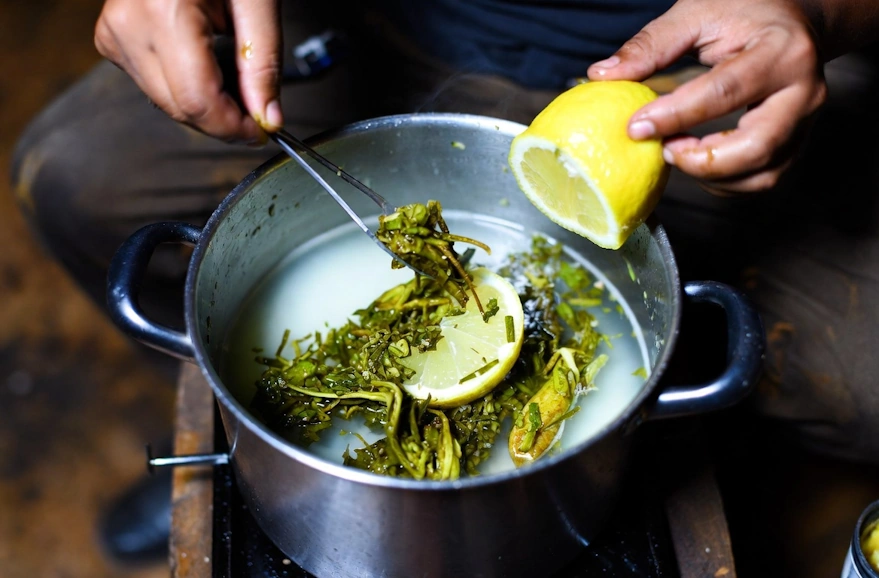
During the preparation of the huachuma, energies are transmitted through the gaze, thought, word, touch; therefore, we have to be very careful and do it with a lot of respect. During the preparation of the huachuma, it’s also sung to lovingly. Okay, in terms of preparation, the green tissues are put in a pot with three times the water and this is cooked for 6 to 12 hours. We need to be cautious because once it begins to boil, San Pedro expands like milk and we have to be sure that it doesn’t overflow. So it’s best to begin with a low heat and then raise it a little bit. A recommendation would be that after three hours of boiling the San Pedro, we can add 200 grams of cane sugar or panela, and we can add a lemon, and this is to reduce a bit the bitter taste it has. When the water is below the pulp, it’s time to filter, and to filter, we need a cloth filter—it can be a t-shirt or a pillowcase. We’ll squeeze this well since the pulp retains a lot of liquid. The San Pedro liquid is generally a brown, dark brown color. After filtering our San Pedro, we’ll have the liquid and we’ll have the pulp. The pulp we can boil again with a bit more water, and this is so that it continues to release the mescaline it contains. If you want to preserve it in this state, the huachuma, we’ll have to wait for it to cool and hang it in a plastic bottle, a glass bottle. Then we proceed to store it in the fridge. The huachuma should be consumed as soon as it is prepared, as it begins to ferment after a while. I don’t need to keep in mind that point when you eat it the part of what makes us vomit is the part that stays on the bottle. So we’re going to use all the top layer; the layer that settles out is usually white colored, and the top layer is the brown color of the huachuma. When we are going to eat it, we must take these two parts, and the top, the brown part, we are going to boil it, then we will wait for it to boil to the consumption. Sucking on a lemon once you’ve taken San Pedro can be helpful because it imparts a bitter taste in the mouth.
Dehydrated Preparation
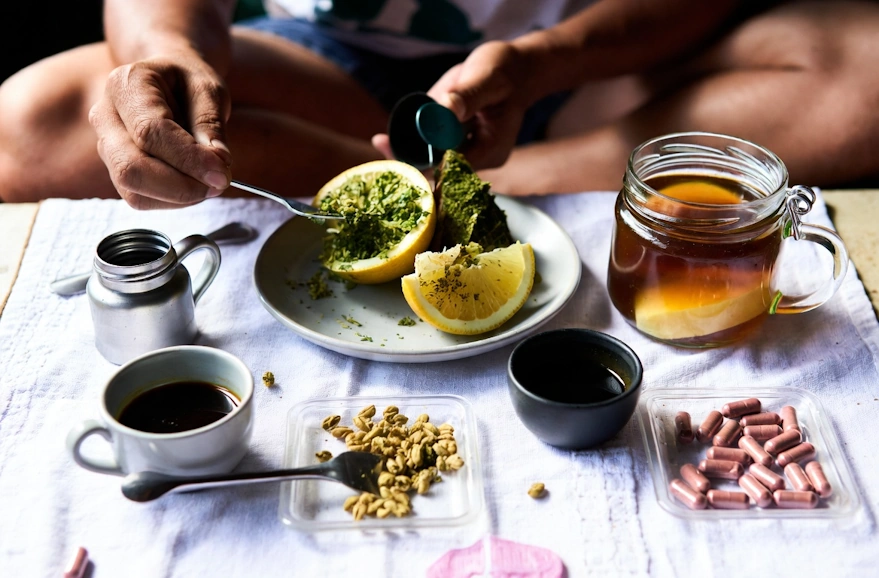
The other process for consuming San Pedro would be by dehydrating it. This is done by leaving the green parts under the sun for several days or exposing them to oven heat for several hours, and this is until it dries. You also shouldn’t raise the temperature too much or leave it under direct sun because this can affect a bit the concentration of alkaloids.In the process of dehydrating San Pedro, after having the dry parts of the San Pedro, what we proceed to do is pulverize until we have a fine powder. To make tea with dried San Pedro we need a tablespoon of powder, we place it on water and boil for 15 minutes.To this, we will also add lemon, for this is so that it has not the bad taste. After boiling for a quarter hour, it also has to be filtered several times. There are people who let this tea boil a bit more until generating a kind of tar; this they then proceed to pulverize and generate a powder which they encapsulate and consume in the form of capsules. Candies You can also make San Pedro candies. To do this, we need the fresh green tissue or the rehydrated tissue. Then we proceed to grind it in a mortar and add honey until obtaining a green paste. Then this green paste we proceed to make a kind of balls, and these we wrap in cloth and hang them and let them dry until they harden. In this way, we also have another way to consume San Pedro. Raw Consumption San Pedro can also be consumed raw, meaning there are people who just remove the green layer and chew it and swallow to absorb all the liquid that the green layer contains
What You Should (But Were Afraid) to Know About San Pedro
Ok, let’s just clear things up. You get some answers about San Pedro, or huachuma, but a baker’s dozen questions appear and you really don’t feel like wading through a robotic FAQ. Here’s the straight talk, how I’d put it if we were face to face.
The Big One First: San Pedro vs. Peyote.
Think of them as cousins with a common purpose. Both have mescaline, but they are two different things. Peyote is the small, sacred, and now endangered North American desert button cactus. San Pedro is the towering, fast-growing columnar guardian of the Andes. The core experience is in the same family, but many say San Pedro is a bit less bitter and its journey can stretch longer—sometimes lasting a full 12 to 18 hours.
Identifying the Two Main Players.
When you’re peering at a San Pedro cactus, you’re probably dealing with one of two variations. The Echinopsis pachanoi is the classic. Its spines are so small and white you could get away without noticing them. Its close relation, Echinopsis peruviana, is a little more bold, boasting grey-brown spines that are one or two centimeters long. Both do the trick, as they both contain the mescaline.
That Old “Male & Female” Story.
You’ll hear this in the markets and from traditional growers. The tale goes that cacti with more than seven ribs are “male” and more potent for ceremony, while those with fewer are “female,” better for planting around a home for protection. It’s a beautiful piece of folklore, but don’t take it as science. The plant’s power isn’t dictated by its rib count.
The Heart of the Matter: What It Does.
This isn’t a casual thing. After brewing and drinking the tea, there’s a gradual climb upwards. You could feel it in an hour, or it could be four. When it does, it’s a full-day affair. Prepare for heightened senses—colors may appear alive, sounds may have texture (that’s synesthesia). There’s often a great deal of introspection, a feeling of connectedness to all things, and, for some, a significant physical and emotional release. Pupils dilate, heart rate may fluctuate, after the peak there can be a long period of peaceful, contemplative clarity.
“How Much?” (The Dose Question)
It doesn’t fit everyone. Traditionally, people calculate a “dose” based on the length of their arm from the elbow to the tip of their fingers—about 40 to 50 cm of fresh cactus. That’s quite a chunk, from one-third of a pound to more than half a pound. For dried green skin, the range is colossal: 14 grams for a very mild introduction, 25-35 grams for a solid trip, and 35-50 grams for a powerful immersive experience. Respect the spectrum.
How It’s Prepared: The Art of Huachuma.
This can serve as a ritual in itself. The outside layer of waxy skin is removed to exposed the powerful green flesh. This is chopped and boiled, sometimes for half a day or longer, reducing into a dark, bitter tea. It’s common to add a little bit of lemon or some raw sugar to tame the powerful flavor. Some dry it and powder it for teas or capsules, but the cheese is the traditional route.
Safety Is Not a Recommendation, It’s a Rule.
This is the most important part. Do not combine it with any other substances! The location is everything: a safe, quiet place in nature, with a completely sober and experienced guide or sitter you trust. Driving or anything requiring concentration is absolutely out of the question. It is not for everyone, especially those with pre-existing heart or severe psychiatric issues. This is for healing and exploration, not recreation.
Cultivating Your Own Bond.
Would you like to grow a relationship with a plant? It’s quite tolerant. The simple method of course is by a cutting. Allow the cut end to dry and callous over for about 2 weeks then plant in well-draining soil. Give it sun, and don’t overwater. You may be surprised that it outgrows you by half a meter in a year, a living connection to an ancient tradition.